
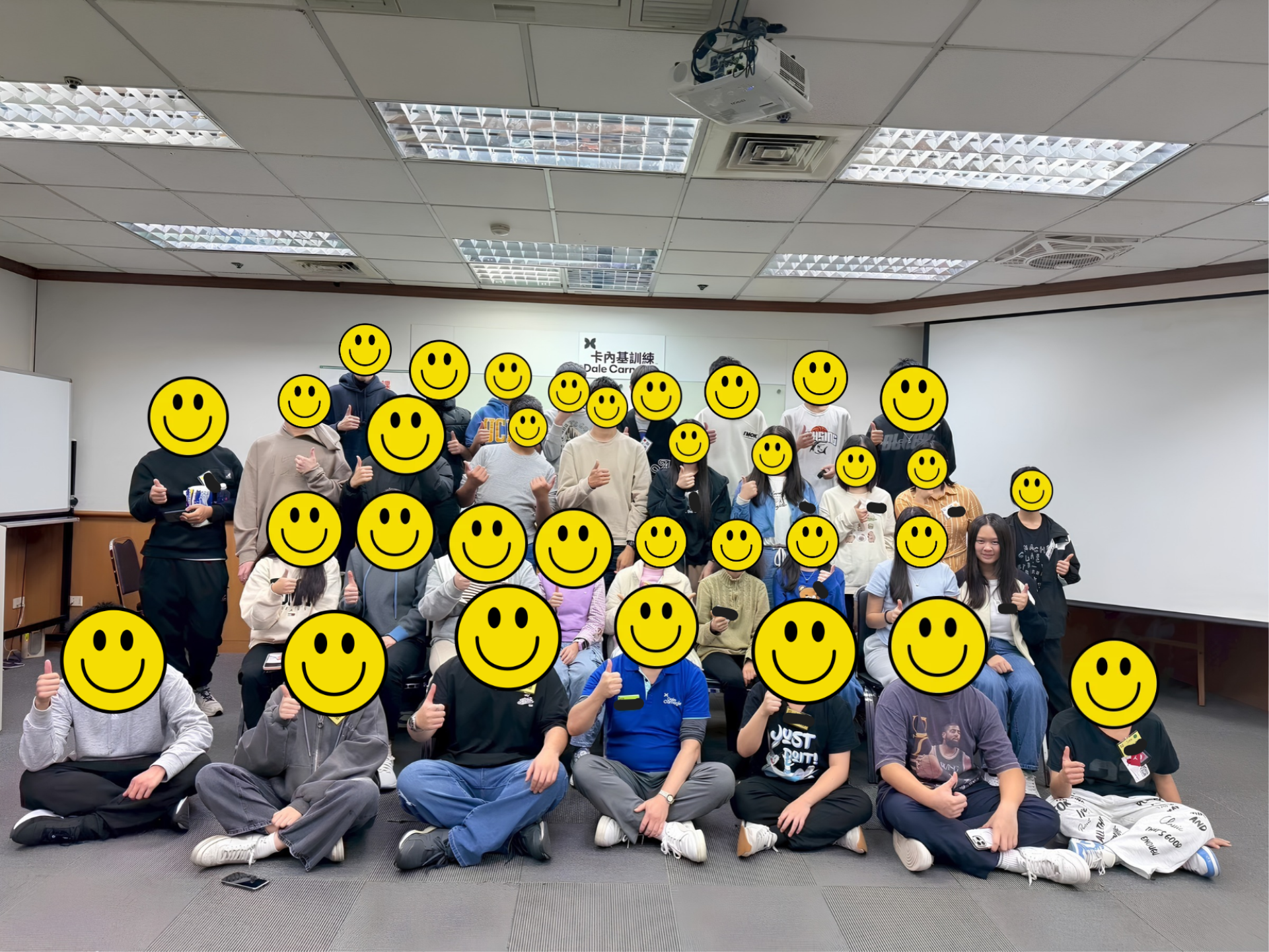
During winter break, my friend and I had to go to the Dale Carnegie Training Center in Zhongzheng District every other day for a week because our parents believed it would be a wise way to spend the break. The course claims to help people achieve success in life and improve social relationships, but I walked in skeptical that this course would work.
After spending four whole days doing this workshop, it turns out that I was right. The course is not only a scam, but it’s also kind of a cult.
What is Dale Carnegie Training?
Dale Carnegie Training is a format of self-improvement course in the self-help industry. It was founded by Dale Carnegie, an American lecturer and author who published one of the first self-help books, How to Win Friends and Influence People. Whether you read the books or learn at the motivational seminars, the course is built around the idea that people can improve their lives by changing their behavior, mindset, and habits through a series of self-help principles.
While some advice may be useful, the self-help industry, specifically Dale Carnegie branded courses, turns to overly simple rules that supposedly work for everyone. These rules, that are really just repackaged common sense, are packaged into expensive courses.
My experience
I participated in the Dale Carnegie Youth Immersive Program specifically for teenagers, which lasted four days from 9 am to 5 pm. Crazy enough, the course cost around 28 thousand NTD.
Throughout the course, we learned basic rules about engaging other people: always smile; don’t criticize, condemn, or complain; always call people by their first name. I mean, they are decent tips for how to treat others, yet the course presents them as difficult social strategies and charges us a lot to “learn” these tips.
We were constantly put into situations that were uncomfortable and were forced to follow through with activities that were embarrassing. These included activities like public speaking about awkward topics in a weird classroom layout.
One of the most memorable experiences was learning to be enthusiastic about everything. Our group sat on two sides of the classroom, forming an aisle. One by one, we had to walk down the aisle while repeatedly shouting, “Act enthusiastic and you’ll be enthusiastic!” before delivering a speech about what you will start doing with enthusiasm and how it will impact our life. I was terrified and my mind went blank so I told the class I’m going to start blow-drying my hair with enthusiasm everyday to prevent getting sick. The whole activity was ridiculous, especially to a whole class of teenagers. None of the group could stop laughing, myself included. However, the teacher got serious and asked me to do it until I did it without laughing, which took me three turns.
In addition to activities like this, we received daily assignments requiring us to apply the rules we learned to our lives. Many students ended up lying because the methods felt awkward and unrealistic. I claimed that I had called my grandparents to thank them for preparing dinner, while others made up stories about helping their parents with chores in order to prevent the teacher from nagging them. Ironically, a course meant to teach genuine relationships ended up pushing us to lie just to satisfy the teacher.
Reasons to not go
The more time I spent in the program, the more I began to feel like I was part of some sort of cult. Students are isolated from the outside world; they collect our phones and put us in classrooms with no windows. Furthermore, they kept peppering us with excessively positive ideas and forced us to deliver speeches that made us seem like advocates for their beliefs rather than students learning communication skills.
Specifically, there was one point where we all sat in a circle, and each took turns to stand in the middle to shout “Just watch us! I know some people will improve, and we’re destined to improve. Do you know why? Because we can accomplish anything!” Almost like a conversation, the rest of the class was required to respond enthusiastically with phrases like “Yes!” and “What!” to cheer them on and reinforce their ideas like programmed robots completing a routine.
Under this bizarre pressure and loud noise, I felt ill. I was participating in a ritual that promises success in life, but you know clearly this is an empty promise, but we had to pretend like we enjoyed it.
Eventually, I walked out and hid in the bathroom until the session ended.
These experiences made me realize the course wasn’t actually developing our confidence. Instead it was teaching us to simply follow instructions and perform enthusiasm.
Later on, I listened to an episode of the podcast series If Books Could Kill about Dale Carnegie’s book. The podcasters criticize the book, and point out that the methods the course teaches are mostly useful for first impressions rather than long-term relationships. Likewise, the underlying philosophy of Dale Carnegie’s ideas are overly idealistic about how life actually is, making them not so useful in real-world situations.
–
In conclusion, the Dale Carnegie course is a complete waste of time and a scam. After the four intense days, all I have are memories of absurd feelings and uncomfortable interactions.
What was supposed to help teenagers develop confidence, leadership skills, and better relationships turned out to be four days of memorizing common-sense rules, doing embarrassing activities, and repeating ridiculous chants. If your parents suggest this workshop, tell them no.

0 Comments