
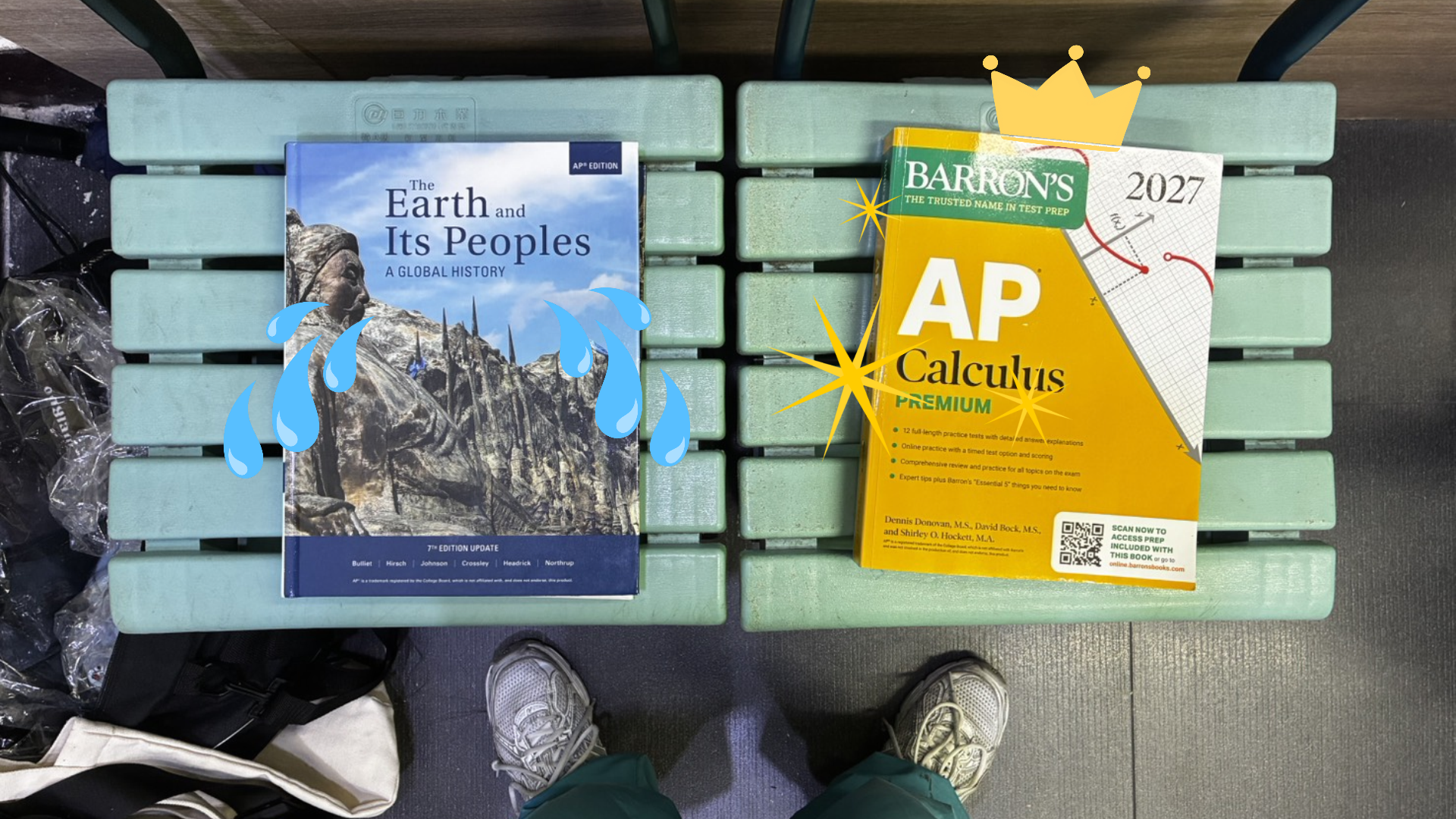
A few months ago, I asked a classmate pursuing AI coding what he thought about the ethics of artificial intelligence. Upon hearing my question, he simply said, “What do you mean by the ‘ethics’?” with a dumbfounded face. I meant issues like AI harming the environment, replacing jobs, or being used in warfare.To me, these connections were obvious.
With the same face, now with a bit of cocky arrogance in it, he replied, “I don’t know or care, actually. It’s not that deep.”
But it is that deep. Society has repeatedly sold us the idea that STEM subjects are the superior, “smart” path to take. As a result, the world is now being blindly led by tech billionaires who think they are above everyone else. In reality, they are just losers in disguise.
The toxic glorification of STEM subjects — Why does this happen?
Growing up in Taiwan, I always thought it was normal for people to value subjects like math and physics more than the humanities. As someone who loves history, I’m often the only person in the classroom who plans to study the humanities in the future.
However, I recently discovered that the glorification of STEM over the humanities isn’t just an Eastern-Asian phenomenon; it’s a global issue. Everywhere you go, there will be this haunting narrative that STEM subjects are smarter, STEM subjects make more money, or that STEM subjects are superior. It is not surprising that some countries are even going as far as to attempt to cut funding for humanities and allocate more money to STEM subjects in education, as seen in Britain or America.
So, why does this happen?
The most direct reason I observed is economic; people think having a shiny STEM degree is more employable than any humanities degree, or at the very least, makes more money. For example, when you think of engineering, your mind immediately connects to jobs like electrical engineering, aerospace engineering, and more. But when someone says they want to major in history, the response is always “so are you going to be a history professor?” or “that sounds cool, but it’d be better off as a minor.” Or in an even simpler way, electrical engineering makes 10 times more money than being a professor. Money is one of the biggest factors people consider, after all.
As a result, a lot of people get pressured into studying STEM subjects, whether they like it or not. I kid you not, the majority of my classmates who are going for a degree in engineering all hate physics with their guts. The fear of limited job opportunities, even if you are interested in the humanities, deters people from going down a more liberal arts path.
Other than the narrative that STEM subjects make more money, there’s this myth that STEM subjects are “harder” or just require more intelligence in general. Subjects like literature and history are seen as easier than math because, in high school, they are more intuitive. Especially in Eastern-Asian culture, people who are good at STEM are culturally seen as smarter than people who excel in the humanities. There also exists a cultural obsession with innovation. Wanting to invent more, wanting to have more progress, all of these fuel people to make the STEM market more saturated than ever.
Why STEM is nothing without humanities
The biggest problem of over-focusing on STEM is that students learn the how and not the why. For example, you can study for years and build the perfect AI program, but if you only study the coding part, you wouldn’t know how to implement the AI to help society, or the problems with its ethicality. In STEM courses, they only teach you how to build and create something, but not why that said thing should exist in the first place.
That’s when the humanities swoop in like Superman to save the day. Humanities (like philosophy, history, art, and literature) give you empathy and understanding of people, which is crucial for designing things people actually want and use. There’s no point in inventing anything, no matter how advanced, if you don’t understand how it fits in the real world.
Speaking of empathy, there is a stark contrast in the level of compassion between people who study humanities and those who study STEM. Don’t you ever wonder why the big tech billionaires like Elon Musk or Peter Thiel always end up either being openly homophobic, misogynistic, or just bigoted? It isn’t just because they were born assholes (that may be a factor), but it’s because they focus too much on money and STEM studies that they never learn compassion and empathy. Through history, you can sympathize with the victims of fascist governments and learn that history shouldn’t repeat. Through literature, you can connect with the author’s experiences through their words, even if they are thousands of miles away, or dead. But in STEM all you do is bury your head in a book full of numbers, of course many students who only focus on STEM studies come out to be socially stunted dorks who can’t hold eye contact for more than 5 seconds.
STEM isn’t much harder than the humanities too; this glaring misconception has to stop. I know saying this is hypocritical, because I hate math and physics with every inch of my soul. But still, being good at STEM doesn’t automatically mean you’re more intelligent. Sure, STEM may require you to memorize more knowledge, and I can even concede that STEM subjects are indeed harder in high school.
But the true studies of humanities go far deeper than whatever high school offers you. Sure, you can simply memorize which side supported slavery in the Civil War and get an A+, but can you analyze the nuance of the causes of civil wars outside of slavery? Can you give your own interpretation of the author’s words in literary pieces? This is what I mean by STEM isn’t harder than humanities, and I am even willing to take a step further and say that in essence humanities are harder than STEM. Because there is no textbook where you can just memorize all the formulas, you actually have to think for yourself and be confident in your own opinions.
What’s waiting for us if we don’t leave the STEM cult
In the status quo, we’re so deeply stuck inside this STEM cult that if we don’t leave, consequences will arrive. It’s not that they haven’t manifested in our world already. Today, we can see how big tech companies prioritize profit over ethics, or how companies are evolving towards a “growth at all costs” mindset. For example, just in March this year, Meta, the mother company for Facebook and Instagram, was found guilty for intentionally designing platforms that fuel social media addiction. They don’t care that social media addictions are ruining teens’ brains; as long as money flows inside their pockets, they can clock off work and call it a day.
And the problems just get even worse when people spearheading this technological revolution are revered by untouchable geniuses. The new “big leaders” like Elon Musk, Peter Thiel are not public servants, but billionaires with too much money, confidence, and not enough ethical reflection. And who becomes best friends with tech billionaires with too much money and no morals? You guessed it: corrupt politicians.
Because many tech billionaires benefit from neoliberal, non-government interventionist policies, they often lobby for the right. This is not random political loyalty, but self-interest. Right-wing economic policies often focus on fewer regulations and more free-market, which allows tech companies to grow with fewer limits. Politicians often attract tech billionaires by offering them the chance to gain direct influence over the government in exchange for their massive funding. This is why you can see Elon Musk being previous head of the Department of Government Efficiency, or Peter Thiel nominating a bunch of political appointees after donating 1.25 million dollars to Donald Trump’s 2016 campaign.
So when we abandon humanities, we are not just losing a few “less practical” subjects, but we are losing people trained to question power, ethics, and the consequence of unchecked ambition. A society run by profit-driven billionaires and power-thirsty politicians isn’t democracy, but a dangerous oligarchy.
So no, humanities aren’t useless. What is useless is a society that can build smarter weapons, or more addictive algorithms, but cannot stop for 5 seconds and ask if we should. A good, beneficial society was never meant to be run by just STEM or just humanities, but together.

0 Comments