
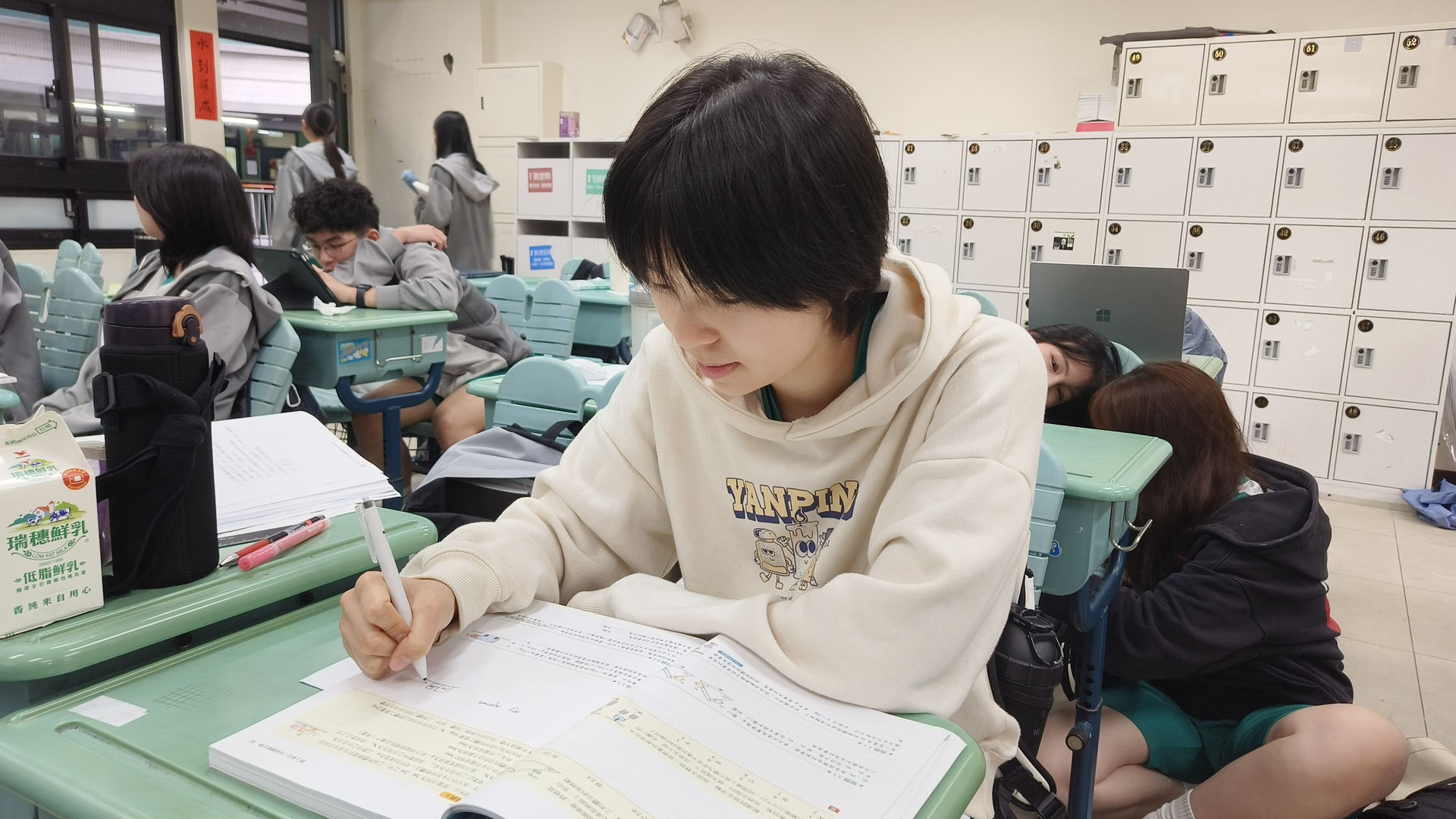
A heavy silence filled my classroom. Rows of my classmates buried their heads in textbooks, fighting for their futures. Just a week after this cram session, they stepped onto the battlefield to face the most important exam of their lifetime: Xue Ce (學測).
Xue Ce is an exam that determines which university students may enter. While some experts claim standardized tests are the fairest way to evaluate ability, Xue Ce is a bad system that needs revision.
Hidden costs for preparing an exam
In terms of magnitude, Xue Ce is much more impactful than a midterm. Many students believe their Xue Ce score will determine their entire future. Therefore, teens push themselves to the extreme, often sacrificing their health.
Most of my classmates suffered during the preparation process due to intense stress. Some of them got pimples all over their faces they hadn’t had before, while others had headaches or stomachaches. Although I maintained a balance between study and life, such as going to bed at 10:30, and exercising at least once a week, I still compulsively scratched my scalp until it bled.
However, physical problems are the tip of the iceberg; mental strain is even harder to deal with. The consistent stress Xue Ce puts on kids can cause depression, anxiety, or changes in behavior. My friend Melody was medically diagnosed with depression because she was afraid of failing. In short, preparing for Xue Ce places students’ physical and mental health at risk.
Pressure beyond the exam
Beyond the pressure students put on themselves, the pressure parents put on kids can make things worse. Some extreme parents project their unfulfilled dreams onto their children, pushing them toward fields such as medicine and engineering. Others want their children to enter prestigious universities, like NTU and Tsing Hua, so they can brag about where their kids go to college. These expectations mean students are not only working for their own futures but also carrying the burden of living up to their parents’ expectations.
At the same time, many students grow up hearing that entering prestigious universities guarantees a successful life. Therefore, failing Xue Ce feels like missing out on the chance to be successful. This misconception amplifies the pressure they already suffer. As such, students choose majors that they aren’t interested in getting into NTU. One of my classmates majored in agronomy, which is agriculture, because her mom wanted her to enter NTU.
Another myth Taiwanese people believe about Xue Ce is that effort always leads to success. The phrase “no pain, no gain” suggests that hard work guarantees results, but this doesn’t apply to Xue Ce. The test questions are unpredictable, and your performance can be impacted by mood, health, and luck. Students may lose confidence in themselves if their effort doesn’t pay off.
Retaking Xue Ce – pause your life to (maybe) be a doctor
Some students take Xue Ce and are dissatisfied with their scores. Many students choose to spend another 1-3 additional years preparing to retake the exam.
In 2025, over 16,000 of students retook Xue Ce, accounting for 13 percent of total. Many of them aim for competitive majors such as engineering or medicine. At the most popular college department in Taiwan, which is the medical school of NTU, around 30-50 percent of test takers any given year are retakers.
Why do students choose to pause their lives and study for years? Are their decisions rational?
To begin with, Taiwanese people have an obsession with medicine. We regard becoming a doctor as the symbol of high income, stability, and social status. This conception subtly influences students’ career choice, narrowing their definition of success. To them, other majors are inferior. As a consequence, they would rather sacrifice years of their young lives studying than settle for a second choice.
Another factor is identity. Too many students build their self-esteem on academic performance. When they fail to achieve their desired goals, their confidence collapses. If they choose to retake Xue Ce, they can start again, proving they are capable and restore their identities.
Because you can just retake it, and because it is so high-stakes, Xue Ce does a bad job of evaluating ability. Rather, it’s an exam that requires learning test strategies that students can just forget once they pass.
Additionally, our society has put too much emphasis on becoming doctors while overlooking other paths to success.
–
As a 12th grader who just took Xue Ce, I would say this system needs improvement.
Right now, students are suffering because they believe their entire future depends on Xue Ce. Entrance to college should not rely on a single high-stakes exam. Colleges should also look at everyone’s academic records, which they don’t necessarily do. If colleges looked at high school grades more, students would have to maintain good performance throughout school, instead of just cramming Xue Ce.
Moreover, students should be allowed to take Xue Ce multiple times, and different subjects should be tested on different days. By balancing the importance of Xue Ce with overall school performance and increasing the number of opportunities to retake the exam, students would be less overwhelmed and colleges would have a better view of the students they are assessing.
I hope in the future, all students can choose their universities freely and avoid risking their physical and mental health. How Taiwan handles college admissions needs to change.

0 Comments