
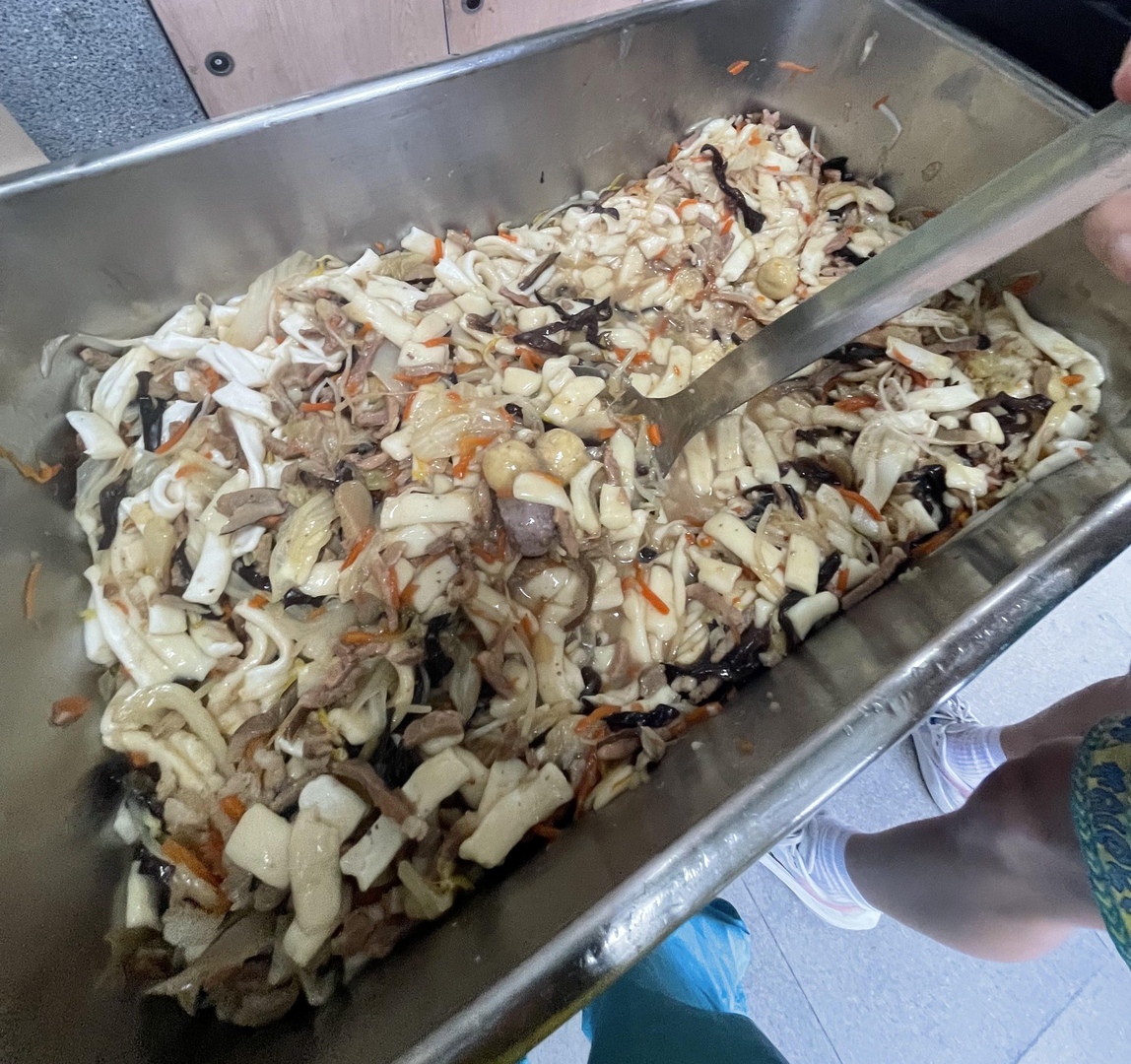
In the first semester of 10th grade, I lost five kilograms. Although I did exercise from time to time, it was not how I lost weight. Instead, what I did was to stop eating school lunch. The funny thing is, when I stopped eating school lunch, my goal wasn’t to lose weight; it was to save myself from the disgusting food my school offers.
High school lunches in Taiwan are notoriously bad. With the food in Taiwanese high schools becoming increasingly inedible, it is time for a change.
Some lunches are unhealthy
When I say the food in many Taiwanese high schools is disgusting, I do not mean because they serve onions or eggplants. Instead, I mean that school lunch is unhealthy to the point that it is disgusting. According to the Child Welfare League Foundation, many schools use reconstructed meat such as sausages, meatballs, or nuggets more than twice a week. Moreover, at least one dish every day will be either high in sugar, oil, or starch.
When you hear me say sausages or nuggets, you might think it’s fun to eat some fried, unhealthy food in school, right? Wrong. The so-called nuggets are soggy and have an obvious, low-quality, constructed meat taste. The vegetables that are required to be in lunch don’t even come close to “healthy”. I once squeezed a whole bowl of oil from a handful of stir-fried cabbage. I’m no cook, but I’m sure plain vegetables aren’t supposed to be more oily than fried chicken.
The fact that 19 percent of schools in Taiwan don’t have a registered dietitian should also be concerning. That means about one in five schools don’t have a professional who can ensure meals are healthy.
Back when I was in elementary school, people called the school lunch “營養午餐” (Yíngyǎng wǔcān), which means healthy lunch. But now they just call it “統餐”, which means everybody eats the same thing. I find this funny because even the officials don’t think it qualifies as “healthy.”
Students don’t eat lunch anymore
When you provide students with food that looks oily and inedible, most of them choose to just not eat or resort to eating small amounts.
Take my school as an example. For a prestigious private school that charges us 100 NTD per meal, it sure is a scam. Because the food is disgusting, many students in my class skip lunch daily or buy something else from a convenience store before school, even if they have already paid the school money for lunch. I am not saying that they serve prison food every meal, but students skipping lunch is such a frequent phenomenon that schools should start to take serious action.
Even if the students put the food on their plate, most of my classmates just throw it in the leftovers bin anyway. According to Vocus, a Taiwanese written journal, schools waste over 3 million tons of food annually in big cities. In New Taipei, there can be over 8000 kilograms of leftovers per day. In Taipei, enough lunch is thrown out each day to feed more than 3,000 students.
Of course, picky eaters exist. But when so many students dislike or refuse to eat lunch, this tells another story.
Solutions
Not all Taiwanese schools have bad lunches. Take Taipei First Girls’ High School, for example. They have a buffet system where students can choose from a wide variety of options. The Students in Taipei First Girls’ High School pay every day when they buy their meal, instead of paying a fixed lunch tuition yearly.
This solves a lot of problems. Firstly, students can choose what they want to eat. That means they’re more likely to finish their meals and avoid wasting food. Secondly, paying day by day lets students be in control of their spending. If the food doesn’t look good that day, they don’t have to pay for it.
—
The current school lunch system in many Taiwanese schools is wasteful, unhealthy, and ignores student needs. With poor-quality food, a lack of dietitians, and a fixed payment system that offers no flexibility, students are skipping meals, and tons of food is literally being thrown down the drain. If schools want to fix this, they need to offer healthier food, more choices, and a system that respects what students want and need.

0 Comments